
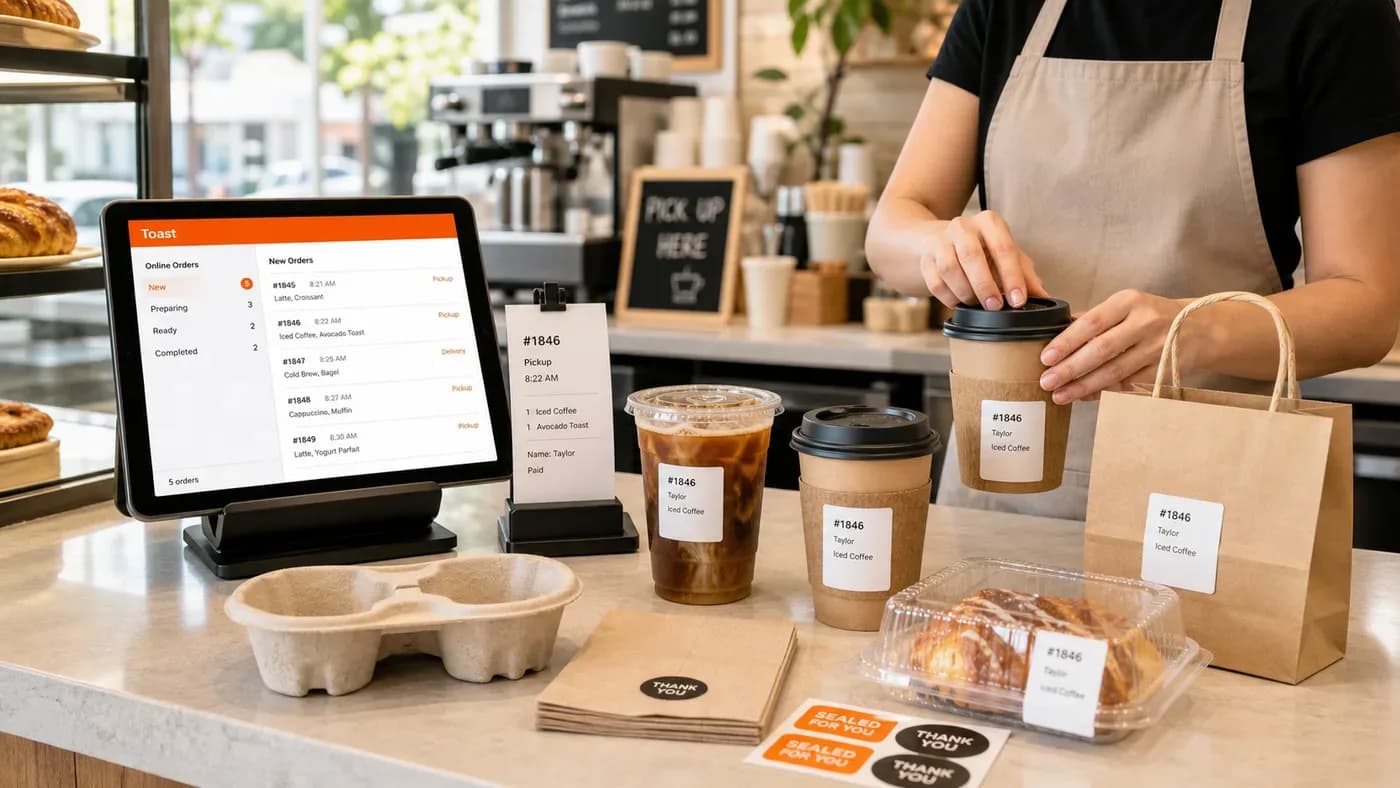
Start with the online menu, not the carton
Toast Online Ordering helps restaurants send digital orders into the operation, but the packaging work still happens at the counter, expo line, or kitchen pass. A useful checklist starts by reviewing every menu category that can be ordered online.
Map each item to its packaging format before launch: iced drinks, hot coffee, smoothies, bowls, entrees, bakery items, sauces, sides, catering trays, and multi-item orders. This prevents staff from solving packaging decisions one ticket at a time during rush hours.
Build the drink packaging set
For cold drinks, confirm cup capacity, rim diameter, lid style, straw size, cup carrier, and whether the order needs a handle bag. Boba, smoothies, iced coffee, lemonade, and fruit tea may look similar online but need different cup and lid choices.
For hot drinks, confirm paper hot cup size, compatible lid, sleeve need, stirrer, napkin, and carrier. If the same restaurant sells both iced and hot drinks, keep the two packaging families separate in reorder notes so staff do not mix lid systems.
Match food containers to real travel time
Online ordering changes the packaging standard because food may sit, travel, or be picked up later than dine-in service. Containers should be tested with the actual menu for heat, sauce level, condensation, stacking pressure, and how the food looks when opened.
Use separate checks for hot entrees, salads, rice bowls, desserts, sides, and sauces. A clear plastic container may help cold prepared food sell visually, while bagasse or paper-based packaging may fit bowls, plates, and eco-positioned meals better.
Plan delivery handoff items
Delivery packaging is more than the main container. Most restaurants need paper handle bags, cup carriers, napkins, utensils, sauce cups, labels, tamper-evident stickers, and a packing rhythm that keeps hot food, cold drinks, and fragile desserts from fighting each other in the same bag.
Create a simple packing rule for the team: which items get bagged together, which drinks need carriers, when to use a reinforced bag, and where labels or seals should go. The goal is a predictable handoff for both pickup guests and delivery drivers.
Use packaging as part of launch operations
Before turning on a new online ordering flow, run a test order for each menu category. Pack the order exactly as staff would during service, then check leakage, lid security, presentation, bag strength, and whether the receipt or label makes the order easy to identify.
This is also the right time to set reorder points. Record the approved packaging item, size, rim or lid family, case pack, monthly usage estimate, and backup option. Opening teams should not depend on memory for packaging that protects every online order.
Where GreenPack Life fits
GreenPack Life can help restaurants turn a Toast Online Ordering menu into a packaging quote list: PET cold cups, paper hot cups, plastic cup lids, takeout containers, bagasse bowls, handle paper bags, carriers, straws, and custom printed items.
This guide is independent and is not affiliated with, endorsed by, or sponsored by Toast. Toast is referenced only because many restaurant operators plan packaging around their online ordering, delivery, and POS workflows.
For a first quote, send the online menu categories, expected order volume, delivery ZIP code, packaging gaps, and any custom branding needs. GreenPack Life can then check product fit and prepare a DDP door-to-door quote before payment.